
Year 7 English Readiness Program
Preparing students for the transition from Year 6 to Year 7 English.
The move into secondary school brings new expectations — particularly in English.
Students are expected to read more complex texts, annotate purposefully, use subject-specific terminology, interpret ideas, structure written responses and work with increasing independence.
The Year 7 English Readiness Program explicitly teaches these foundational skills before students are expected to use them independently in the secondary classroom.
The transition to Year 7 is more than a change of classroom.
Starting secondary school means navigating new teachers, subjects, routines and expectations.
In English, the shift is academic too.
Students begin moving beyond simply understanding what they have read. They are increasingly expected to identify important ideas, consider how meaning is created, support their thinking with evidence and communicate their ideas clearly.
For many students, these expectations are new.
The Year 7 English Readiness Program makes them more familiar.
Who is this program for?
The Year 7 English Readiness Program is designed for Year 7 students beginning high school in the new school year.
The program is designed for students who would benefit from strengthening their reading, writing, analytical and independent learning skills required in secondary English, while they are adjusting to the expectations of Year 7.
For some students, that may mean consolidating foundational skills.
For others, it may mean learning how to apply familiar skills more confidently and independently in a secondary English environment.
What students will learn
The program is organised into four carefully sequenced areas of learning.
-
Students learn that reading in secondary English involves more than simply reaching the end of a text.
They develop strategies for reading actively, thinking before, during and after reading, building vocabulary, strengthening comprehension and using annotation as a purposeful tool for understanding.
Rather than highlighting everything, students begin learning what to notice, why it matters and how their observations can support deeper thinking.
-
Students develop the foundations of clear and purposeful written communication.
They explore how strong sentences and paragraphs are constructed, how ideas can be planned before writing and how evidence can be used to support a response.
Students are also introduced to editing as part of the writing process, learning how to refine their ideas rather than treating a first draft as a finished response.
-
Secondary English increasingly asks students to move from understanding what happens in a text to considering how and why meaning is created.
Students explore concepts including character, setting, theme, author’s purpose and literary techniques while beginning to develop their own interpretations.
The focus is not simply on identifying a technique.
Students begin learning how to explain what they notice and why it matters.
-
English is not limited to written texts.
Students learn how images, film and multimodal texts communicate ideas through visual choices and techniques.
They are introduced to visual literacy and key film elements while developing the language needed to explain how different features work together to influence meaning and audience response.
How students learn
Explicit teaching. Purposeful practice. Growing independence.
Students should not be expected to simply know how to annotate, analyse, structure a response or interpret a text.
These skills are taught explicitly.
New concepts are introduced clearly, modelled by the teacher and practised with support before students are asked to apply them more independently.
Students experience a combination of teacher modelling, guided practice, discussion, collaborative learning and independent application.
The aim is not to give students a scaffold they become dependent on.
The aim is to teach them how to think without one.
Building independence for secondary learning
One of the biggest changes students experience in Year 7 is the expectation that they will manage more of their learning independently.
Throughout the program, students are encouraged to become increasingly responsible for the way they approach texts, tasks and their own thinking.
Support is provided when it is useful and gradually reduced as students become more capable of applying strategies for themselves.
Because readiness for Year 7 is not about knowing everything before secondary school begins.
It is about knowing how to approach learning when something is new.
A small-group learning experience
The Year 7 English Readiness Program is delivered in small groups, allowing students to participate, ask questions, share ideas and receive direct teacher guidance throughout each learning experience.
Cohorts are intentionally kept small, with approximately 10 students, so learning remains interactive and students have opportunities to contribute rather than simply watch.
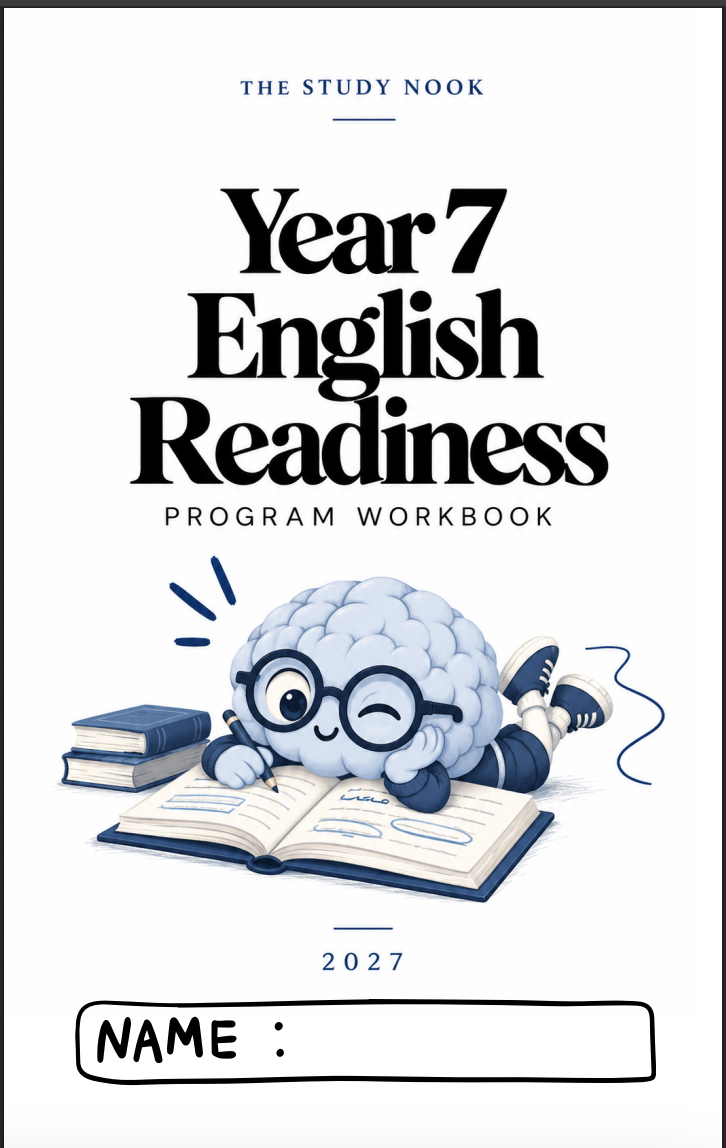
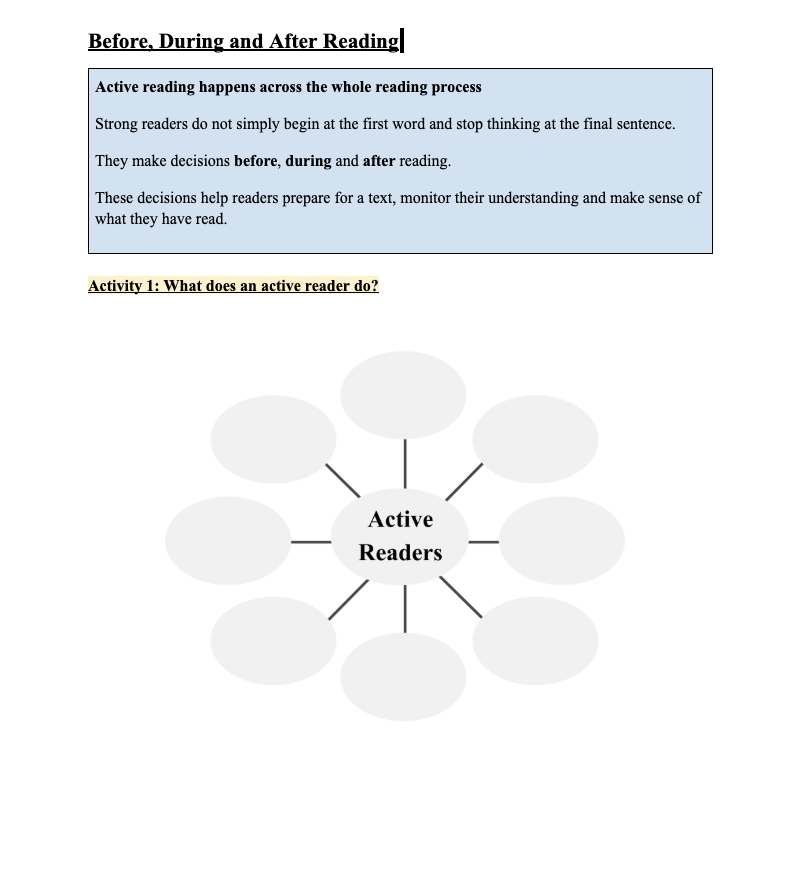
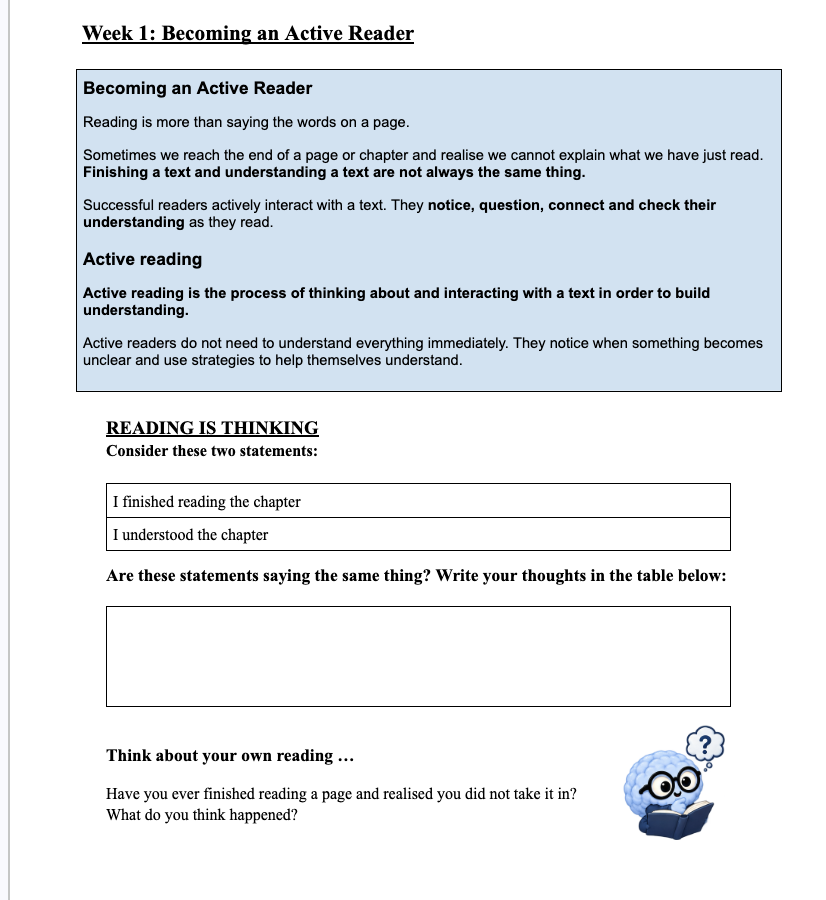
Students work through a purposefully designed program supported by learning materials and their own program workbook.
The workbook is not an add-on to the program — it is part of the learning experience.
Enrolment Enquiries
Enquiries are now open for the Term 1, 2027 Year 7 English Readiness Program. Each group is limited to ten students.
Complete the enquiry form to receive information about session times, availability, program fees and payment options. Enrolment documentation and payment details will be provided once you’re ready to proceed.
-
The Term 1, 2027 program is designed for students starting Year 7 in 2027. It strengthens foundational English skills as students settle into the expectations of secondary school.
-
Complete the program enquiry form to receive full fee information and available payment options. All costs and enrolment terms are provided before you commit to a place.
-
The program will run throughout Term 1, beginning in Week 2. This gives your child time to settle into their first week of Year 7.
The exact day and time will be confirmed upon enrolment.
-
Cohorts are intentionally kept small, with a maximum of 10 students
This allows students to participate in discussion, ask questions, practise new skills and receive direct teacher guidance throughout each session.
-
No.
The Year 7 English Readiness Program is not designed as a remedial program. It is designed to prepare students for the changing expectations of secondary English.
Students will enter with different strengths and different areas for development, and the small-group environment allows those differences to be supported.
-
Yes.
The Year 7 English Readiness Program is delivered face-to-face in a small-group learning environment.
Venue and location details will be provided with each program intake.
-
Because the program is taught as a carefully sequenced learning experience, regular attendance is encouraged.
Details regarding missed sessions and available options will be provided to families before enrolment so expectations are clear from the beginning.
-
Each student receives their own Year 7 English Readiness Program workbook and supporting learning materials to use throughout the program.
The workbook forms part of the learning experience and gives students opportunities to practise, apply and revisit the skills taught during sessions.
-
Students will be asked to bring their program workbook and basic stationery to each session.
Any additional materials required for a particular learning experience will be provided.
-
Not in the traditional sense.
The Year 7 English Readiness Program is a structured transition program with a carefully sequenced curriculum designed specifically around the move from Year 6 to Year 7 English.
Students are explicitly taught the reading, writing, analytical and independent learning skills they will begin using in secondary school.
-
The focus of the program is on purposeful learning during each session rather than creating an additional workload for students.
Students may occasionally be encouraged to revisit or apply a skill between sessions, but the program is not designed around weekly homework.
-
The program is not designed to pre-teach a particular school's Year 7 curriculum.
Instead, it develops the transferable English skills and learning habits students are likely to draw upon across different secondary school contexts — such as reading actively, annotating, interpreting texts, structuring responses, using evidence and approaching learning more independently.